"We've never dived into something unless we could see a real relationship"
A conversation on vendor relationships, team buy-in and the future of the accounting firm with Dan Cooper, Partner at Ryecroft Glenton.

Henrik Grim
Co-Founder & CEO
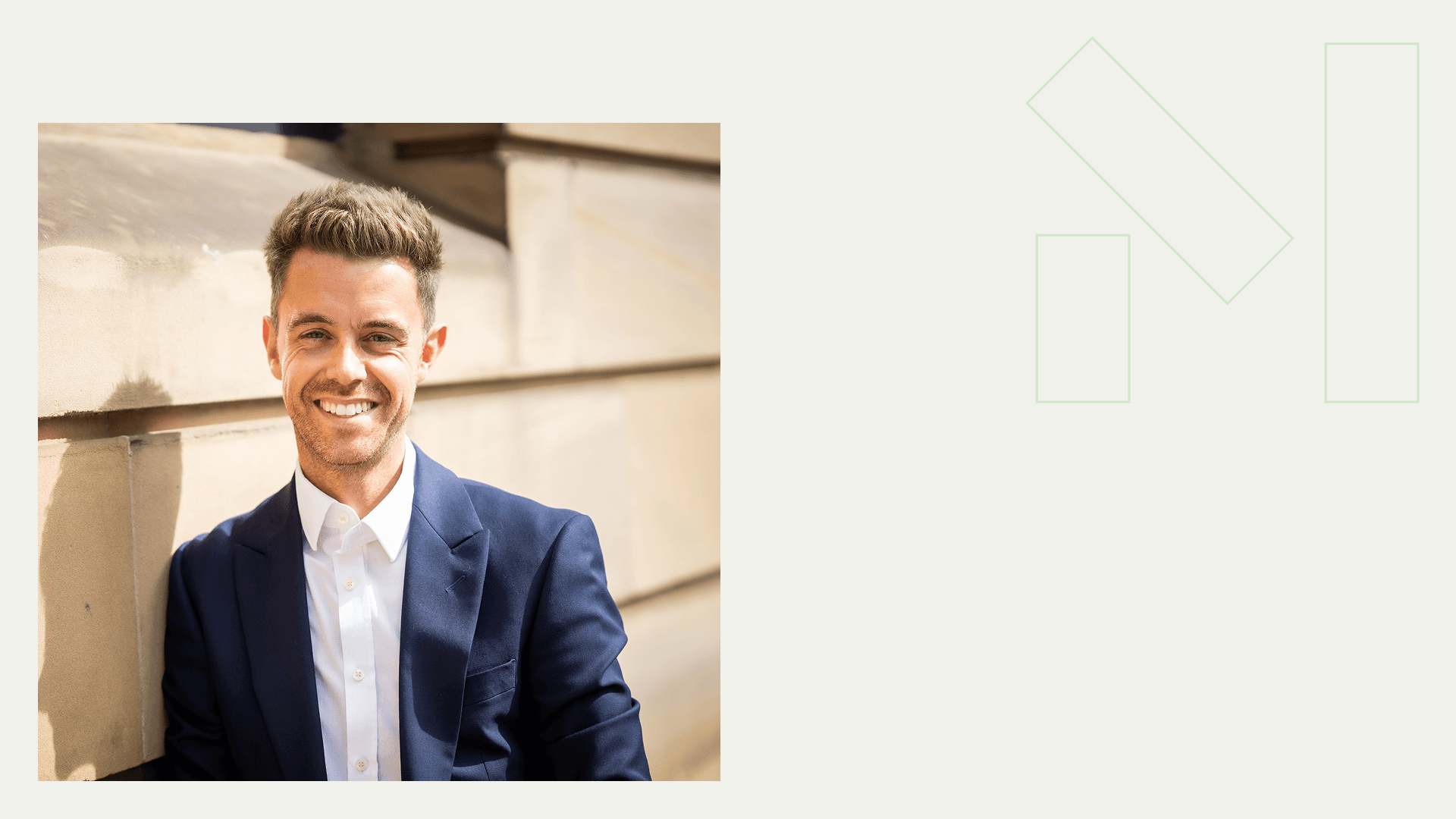
Dan Cooper has a simple test for any new technology his firm considers. Not a feature checklist, not an ROI calculator. A relationship question.
Is the company on the other side of this actually going to work with us, or are they just going to sell to us?
As Partner and Head of Outsourced at Ryecroft Glenton, a firm offering fully outsourced finance functions and advisory services to growing businesses, Dan has spent the better half of a decade watching technology partnerships play out. The pattern he keeps seeing is the same: a firm commits to a product, gives feedback, and watches that feedback disappear.
"One of the most common responses we get is that nobody has ever asked for something that we've raised. Which makes no sense."
This matters more now than it ever has. AI is arriving in accounting firms not as a distant possibility but as a present-tense decision, something leaders are being asked to evaluate, commit to, and implement while the category is still being defined. The firms getting it right aren't necessarily the ones moving fastest. They're the ones being most deliberate about how they move, and who they move with.
Finding something that actually works
The accounting technology market has a credibility problem. Not because the products don't work, but because the gap between what gets promised in a demo and what gets delivered in practice has trained firm leaders to be sceptical, often for good reason.
Dan has felt this. His division spent years looking for a payments solution with limited luck.
"No matter how much you give feedback, nothing really comes of it. Your feedback goes on the list and actually nothing ever happens."
What changed his approach wasn't a better product. It was a different kind of conversation, one where the roadmap was visible, where his team's input was visibly shaping what got built and where the relationship felt reciprocal rather than one-directional.
In an industry where the default is to wait for more certainty, more proof points, more case studies from other firms, Dan's rationale for moving early on AI-powered month-end automation was relational rather than technical. He wasn't convinced by a feature set - he was convinced by how a conversation felt. That's pattern recognition from someone who has watched enough technology partnerships fail to know what a different one looks like.
The human side of getting there
A few months ago, Dan stood in front of his team and outlined where he wanted to take the firm. Part of that vision involved AI. The response from some of the room was immediate.
"What does this mean for my job?"
He gets it. AI is arriving in this profession at a pace that feels genuinely fast to people building careers here. What Dan did next is the part worth paying attention to. He didn't reassure his team from the front of the room. Rather, he brought them into the process, including staff who had recently come through their chartered exams, and let them engage directly with the technology themselves.
What changed the conversation wasn't a vision or a strategy document - it was specificity. When people could see exactly which parts of their day-to-day work were going to change, and how, the abstract worry about job security gave way to something more useful.
Take prepayments. One of Ryecroft Glenton's clients have prepayment volumes running into the hundreds every month, work that was taking hours and is now, with Mimo Associate, taking minutes. For a team member doing that work, it's immediately legible in a way that broader claims about AI efficiency simply aren't.
"They can see the benefits straight away. They know that their job's not at risk. They can see how this is going to enhance their training, how they can develop into advisors quicker because they've got the data analysed at their fingertips."
The buy-in came quickly, not because anyone was told not to worry, but because they could see it themselves. The firms struggling with internal adoption almost always follow the same pattern: leadership decides, announces, and then wonders why uptake is slow. Participation changes that. It's not a communications strategy, it's a design choice about how you implement.
What comes next
Push Dan on where this leads in three to five years and he gives you a picture that is ambitious without being utopian.
The firms that lead will be heavier at the advisory end, not because compliance work disappears, but because the time currently absorbed by data management gets absorbed by technology instead. The path from foundational training to genuine advisory capability gets shorter. The technology stack consolidates too, from the five to eight products per client that Dan's division once ran down to one or two platforms managing the full finance function.
"I do truly believe we still need to be bringing school leavers, graduates, people with no experience through. We will just excel them much, much quicker."
The firms already doing that work, finding the right relationships, building the processes, bringing their people with them, are accumulating an advantage that will be difficult to close later.
"Firms really just have to be clear on what their path is. And get on board."
Ryecroft Glenton is an accounting and advisory firm based in the North East of England. Dan Cooper leads their outsourced finance and advisory division.